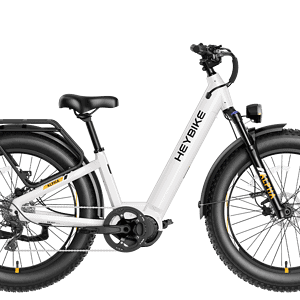
The Origins of eBikes
From the Draisine to Today and Beyond
- eBikersDen
- No Comments
The electric bicycle, or ebike, represents the intersection of human-powered mobility and electric innovation. Its journey from conceptual precursors to today’s widespread adoption is a fascinating tale of mechanical evolution, social necessity and technological innovation. We’re going to look at the ebike’s development, from early attempts to augment pedal power, to the modern electric-powered machines that are transforming urban transport today. Along the way, a number of visionary inventors and societal shifts contributed to the growing prominence of ebikes.
Early Bicycle Innovations and Precursors

The modern ebike has deep roots in the history of bicycles. The bicycle itself underwent significant changes over the centuries before the concept of electrification was even considered. Some of the first recorded instances of bicycle-like devices can be traced back to the early 19th century. For example, the Draisine,” invented by Karl Von Dreis in 1817, was a precursor to the bicycle, featuring two wheels and a steerable front, but it lacked pedals. Riders would push it along with their feet, and it was seen as a solution for faster ground transportation at a time when horses were the primary mode of travel.
Bicycles, as we know them today, started taking shape in the 1860s and 1870s with the development of the pedal-powered velocipede and the high-wheeled penny-farthing. By the late 19th century, innovations like the safety bicycle – a design with equal-sized wheels and chain-driven rear wheel – transformed bicycles into a practical and accessible form of transportation. These developments coincided with the Industrial Revolution, a period of rapid technological advancement, which created fertile ground for the idea of electrically assisted bicycles.


The First Electric Bicycle Prototypes


The desire to augment human power with electricity can be traced back to the late 19th century, a time of great excitement about the potential of electricity to revolutionize industries. One of the earliest known patents for an electric bicycle dates back to 1895 when Ogden Bolton Jr applied for a US patent for a bicycle equipped with a direct-current (DC) motor attached to the rear wheel. Bolton’s design included a battery housed in the bicycle’s frame, although it had no gears, meaning riders had to rely on pure electric power or pedaling.
A year later in 1896, Hosea W Libbey of Boston invented an electric bicycle that featured a double electric motor. Libbey’s design is considered a precursor to modern ebike motors because it introduced the concept of a motorized hub, a design still in use today. At the time, however, electric bicycle technology was limited by the bulky and inefficient batteries available.
Though these early inventions laid the groundwork for future developments, electric bicycles did not become mainstream for decades. The technology to create practical, mass-market ebikes simply wasn’t there, and bicycles remained powered purely by human strength.


The Rise of the Automobile and Dormancy of the eBike
The ebike’s potential was put on hold throughout much of the 20th century, as the rise of automobiles reshaped transportation. Cars offered greater speed, range and convenience, and infrastructure was developed to support this new form of travel. Bicycles, for much of the 20th century, were increasingly seen as recreational or sport transport rather than essential modes of urban transport.
While electric bicycles continued to exist in some niche areas, particularly in Europe and Asia, they never reached widespread adoption. Battery technology remained a limiting factor, as did societal attitudes toward bicycles. However, by the late 20th century, a confluence of factors began to make the concept of electric bicycles more appealing.

The Late 20th Century: eBikes Resurface
By the 1990s, technological advancements in battery storage, particularly the development of more efficient and lightweight lithium-ion batteries, revived interest in electric bicycles. In addition to battery improvements, brushless electric motors became more compact and efficient, allowing for more seamless integration with bicycle designs. A shift toward urbanization in many parts of the world also created a greater need for practical, eco-friendly alternatives to cars, sparking renewed attention toward ebikes.
During this period, several companies began to market electric bicycles, particularly in Asia, where dense cities and pollution concerns made ebikes an attractive option. Japan was a major player in this regard, with Yamaha launching its first commercially available electric bicycle in 1993. Other manufacturers soon followed, particularly in China, where ebikes became hugely popular as an alternative to gasoline-powered scooters. China’s massive adoption of ebikes can be seen as a pivotal moment for the global industry.
The European market also began to embrace ebikes in the late 1990s and early 2000s. In countries like the Netherlands and Germany, ebikes found success as a sustainable solution for short-to-medium-distance travel in cities where cycling was already an ingrained part of the culture. The electric motor provided the necessary boost to make cycling more accessible to older adults or those facing hills and longer commutes.
Why People Thought eBikes Were Necessary
The rise of ebikes can be seen as a response to several societal and technological factors. First, as cities grew more congested and environmental concerns became more prominent, people began to search for alternatives to cars that were both practical and sustainable. Traditional bicycles, though efficient and inexpensive, were not always the best solution for longer commutes or hilly terrain. The addition of electric motors made cycling a more viable option for a larger population, helping reduce the barriers associated with physical exertion and extending the range of what a person could realistically accomplish on a bicycle.
Additionally, as fuel costs increased and awareness of climate change grew, ebikes began to be seen as an eco-friendly alternative to gasoline-powered vehicles. Ebikes offered a way to reduce emissions while also promoting physical activity. Governments, particularly in Europe and Asia, recognized this potential and began incentivizing ebike adoption through subsidies and infrastructure investments, such as dedicated bike lanes and charging stations.

Modern Technology and Specs
Today’s ebikes represent the culmination of over a century of innovation, from early prototypes to sophisticated modern machines. Most modern ebikes rely on one of two types of motors: hub motors or mid-drive motors. Hub motors, located either on the front or rear wheel, offer a relatively simple and cost-effective design. Mid-drive motors, located in the bike’s crankset, are more expensive but provide better weight distribution and a more natural riding experience, particularly for hills.
Batteries are one of the most critical components of modern ebikes, with lithium-ion technology dominating the market due to its high energy density and relatively lightweight profile. A typical ebike battery might offer a range of 20 to 60 miles, depending on factors like terrain, rider weight and level of assistance used. Some high-end models can exceed 100 miles on a single charge, especially with newer battery technologies like lithium-polymer and solid-state batteries on the horizon.
Modern ebikes also come equipped with various levels of pedal-assist, where the motor only provides assistance when the rider is actively pedaling. Some systems feature multiple modes, allowing the rider to choose between more assistance for difficult terrain or less assistance for conserving battery life. Speed regulations vary by region, but in many places, ebikes are restricted to a top speed of 32 kph (20 mph) with motor assistance, after which the motor cuts out and the bike operates like a normal bicycle.
Other modern features include integrated lights, GPS tracking, Bluetooth connectivity, and even smart systems that adjust motor assistance based on riding conditions. eBikes have also become more diverse in their offerings, with models designed for specific uses such as commuting, mountain biking and cargo transport.
Coming Advances and the Future of eBikes
As ebikes continue to grow in popularity, the industry is focused on several areas of innovation. One key area is battery technology. While lithium-ion batteries dominate today, the future may see widespread adoption of solid-state batteries, which promise even higher energy density, faster charging times and greater safety. As battery technology improves, ebikes will become lighter, more powerful and capable of longer ranges.
Motor technology is also evolving. While today’s motors are efficient and powerful, new developments in motor design could lead to lighter and quieter systems. In particular, manufacturers are working on ways to integrate motors more seamlessly into the bike’s frame, improving both aesthetics and aerodynamics.
Another future trend is the integration of artificial intelligence and machine learning into ebike systems. Some companies are already experimenting with smart ebikes that can analyze a rider’s habits and adjust motor assistance and battery usage in real-time for a more optimized riding experience. Advanced navigation systems, powered by AI, may also become standard, providing route suggestions that optimize for battery life or avoid difficult terrain.
Urban infrastructure will play a critical role in shaping the future of ebikes. As cities continue to grow and face increasing pressure to reduce emissions, many are investing in bike-friendly infrastructure. This includes not only more bike lanes but also dedicated charging stations for electric bicycles, as well as integration with public transportation systems. eBikes are increasingly seen as a solution for the “last mile” problem – helping commuters bridge the gap between public transit stations and their final destinations.
The concept of shared ebikes is another emerging trend. Many cities have already implemented bike-sharing programs, and as ebikes become more affordable and widespread, it is likely that shared electric bikes will become a common feature of urban transportation systems.
-
$1,699.00 USD