
How Far Can You Go?
eBike Range and the Things That Affect It
- eBikersDen
- No Comments
eBikes (electric bikes) have gained massive popularity in recent years, offering a convenient and eco-friendly alternative to traditional transportation methods. A major concern for ebike users, however, is the range – how far a rider can go on a single charge. This is influenced by a variety of factors, including the size of the battery, the weight of the rider and any cargo, terrain and weather conditions. Understand these aspects to maximize your ebike’s range and ensure an enjoyable and efficient riding experience.

The Battery
At the heart of every electric bike is its battery, which plays a crucial role in determining the overall range. Batteries are typically rated in terms of their voltage (V) and ampere-hours (Ah). Voltage indicates the potential power output, while ampere-hours represent the battery’s capacity or how long it can provide that power. The combination of these two factors gives us the total energy capacity of the battery, often measured in watt-hours (Wh). A simple formula to calculate the energy capacity is:
Watt-hours (Wh) =
Volts (V) × Ampere-hours (Ah)
For example, if an ebike has a 48-volt battery with a capacity of 10 ampere-hours, it would have a total energy capacity of 480 watt-hours. The higher the watt-hours, the longer the potential range of the ebike. However, this does not mean that a larger battery automatically equates to significantly longer distances. Multiple variables come into play, making the range estimation more complex than simply looking at the battery’s specifications.
Battery Aging
The aging process of an ebike battery is a critical consideration for range. Over time, all rechargeable batteries degrade, losing their ability to hold as much charge as they did when new. This is true for lithium-ion batteries, which are the most common type used in ebikes. With each charge cycle – defined as one full discharge and recharge – the battery loses a small fraction of its capacity. After hundreds of charge cycles, this capacity loss becomes more noticeable. For instance, a battery that initially provided 60km/40mi of range might only provide 50km/30mi after a few years of use, depending on how frequently it has been charged and discharged. Proper battery care can help slow this degradation. For example, avoiding complete discharges and not leaving the battery at 100% charge for extended periods can extend its lifespan. Storing the battery in a cool, dry place when not in use also helps to mitigate the effects of both heat and cold.

Riding Habits
Riding habits influence the battery’s longevity and the range of an ebike. If a rider frequently uses the highest level of pedal assist or throttle, the motor will consume more energy, reducing the battery life and overall range. Conversely, using lower levels of assist and contributing more pedaling effort can significantly extend the distance an ebike can travel. Many modern ebikes come with different assist modes, allowing riders to choose how much motor assistance they want. By selecting a lower assist level on flat terrain or when riding at slower speeds, riders can conserve battery power for when it’s needed most, such as on steep inclines or in headwinds.

Rider and Cargo Weight
One important factor affecting the range is the weight of the rider and any cargo. eBikes are designed to assist riders by providing motorized support, but the motor needs to work harder when the total weight is increased. This additional demand on the motor reduces the overall range of the ebike. For instance, a 70kg/150lb rider will experience greater range compared to a 100kg/220lb rider if all other factors remain constant. Cargo – backpacks, groceries, panniers, tools – adds to the weight burden and impacts the battery’s efficiency. As weight increases, the motor draws more power to maintain speed, resulting in a faster depletion of battery energy.


Terrain
Terrain also has a significant effect on ebike range. Riding on flat, smooth roads consumes less energy compared to riding uphill or on rough surfaces. When ascending a hill, the motor is forced to work against gravity, requiring more energy to maintain momentum. Similarly, riding on uneven or loose terrain, such as gravel, sand or dirt, introduces rolling resistance, causing the bike to exert more effort. These challenging conditions cause the battery to drain more quickly, reducing the overall distance that can be covered on a single charge. On the other hand, downhill rides allow the bike to coast more easily, sometimes even regenerating a small amount of energy depending on the bike’s regenerative braking system, but this is rarely enough to make a noticeable difference in range.
Weather
Weather conditions contribute to the performance of an ebike’s battery and its overall range. One of the most influential weather-related factors is temperature. Both hot and cold temperatures can negatively affect the battery’s efficiency and lifespan, thus altering the range. In cold weather, particularly when temperatures drop below freezing, batteries become less efficient. This is because the chemical reactions inside the battery slow down, leading to a decrease in the amount of energy it can store and deliver. Riders might notice that their battery depletes faster than usual, and the overall range is significantly reduced. It is not uncommon for ebike riders to experience a 20-30% reduction in range when riding in cold conditions. In extremely cold weather, below -10°C/14°F, the battery might even shut down temporarily to protect itself from damage. This can leave a rider stranded if they are not prepared for such a situation. Some ebikes are equipped with thermal management systems to mitigate the effects of cold weather, but they can only do so to a certain extent.
On the other end of the spectrum, hot temperatures can also have adverse effects on battery performance. When exposed to heat, the internal components of the battery may degrade faster, reducing its overall lifespan. While a hot environment does not have the immediate effect of reducing range like cold weather does, it speeds up the ageing process of the battery, leading to diminished capacity over time. Riders who frequently use their ebikes in hot climates might notice that their battery’s ability to hold a charge diminishes more quickly than expected, thus limiting the range after extended use.


Wind Resistance
Speaking of headwinds, wind resistance can further impact an ebike’s range. Just as a strong headwind can make pedaling more challenging on a traditional bicycle, it forces the motor to work harder on an ebike. The increased energy required to push through the wind drains the battery faster, reducing the overall distance that can be covered. Tailwinds, on the other hand, have the opposite effect, making it easier for the motor and rider to maintain speed and conserving battery life in the process.
Speed
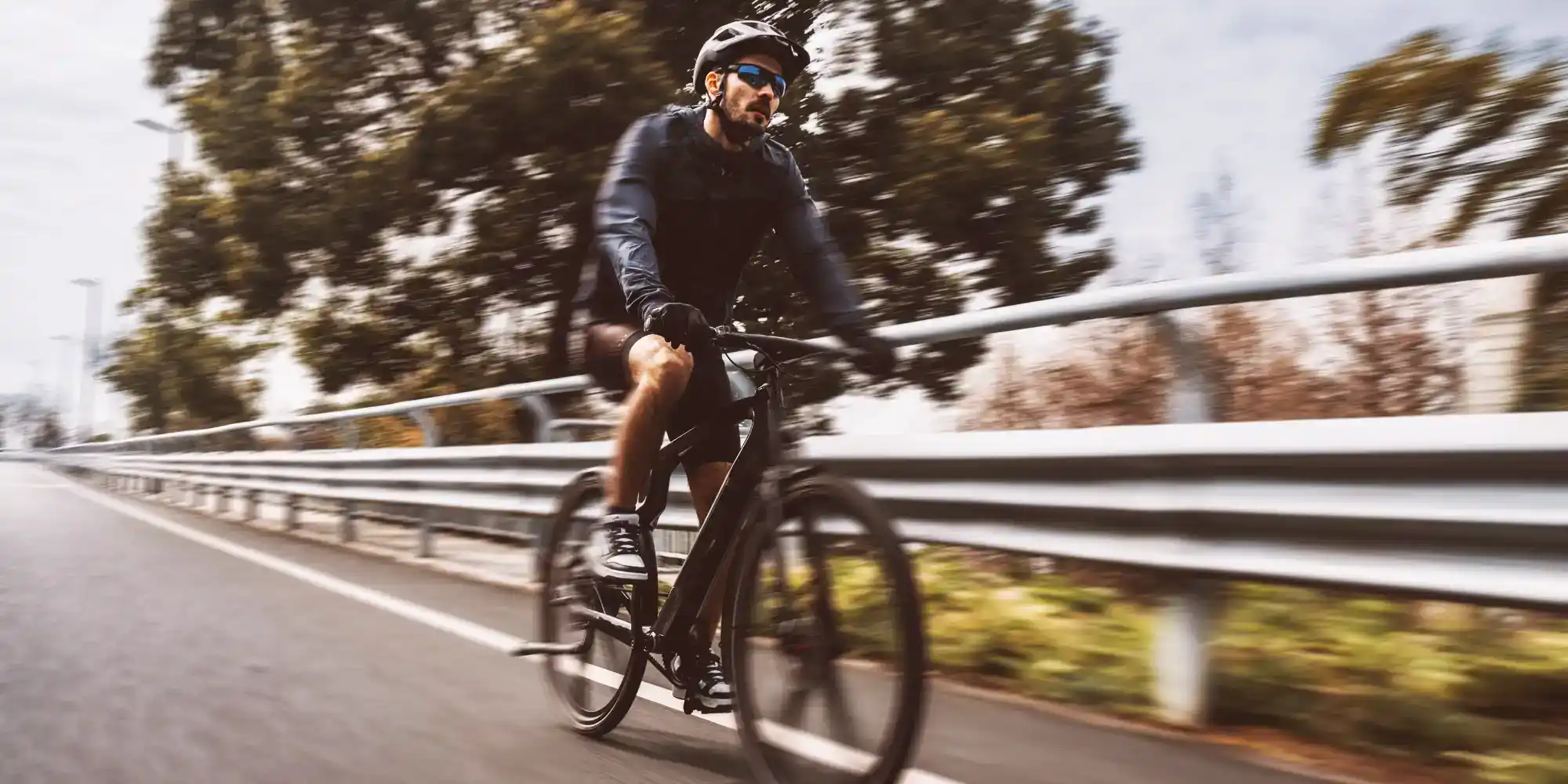
The overall speed at which an ebike is ridden also plays a role in determining range. Riding at higher speeds requires more energy from the battery, as wind resistance increases exponentially with speed. For this reason, ebike manufacturers often list two different range estimates: one for slower speeds and one for faster speeds. For example, an ebike might have a range of 80km/50mi when ridden at a steady 20kmh/12mph, but only 50km/30mi at 30kmh/20mph per hour. Riders who want to maximize their range should consider maintaining a moderate speed, especially on longer trips.
Get a Bigger Battery?
To get the most out of an ebike’s range, it’s important to consider all of these factors together. While a larger battery might seem like the best solution, it’s not always practical or necessary. A rider’s weight, the terrain, weather conditions, and riding habits can all have a significant impact on range, meaning that proper planning and understanding of these factors is essential for a smooth and efficient ride. Additionally, taking care of the battery – including protecting it from extreme temperatures and following good charging practices – will help ensure that it continues to provide reliable performance over time.

Motor Efficiency – Mid-Drive vs Hub
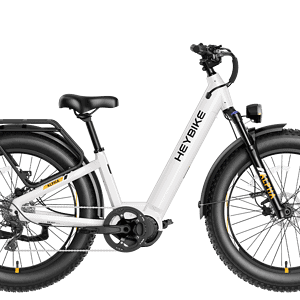
Another element worth mentioning is the efficiency of the ebike’s motor. Some motors are more efficient than others, which can affect how far a rider can travel on a single charge. For example, mid-drive motors, which are located near the pedals, are typically more efficient than hub motors, which are located in the wheels. This is because mid-drive motors work in tandem with the bike’s gears, allowing the rider to optimize power output depending on the terrain and speed. Hub motors, while simpler and less expensive, often require more energy to achieve the same level of performance, thus reducing the overall range.


Tires Matter
Finally, the type and pressure of the tires can also affect range. Wider, knobby tires, designed for off-road use, generate more rolling resistance and require more power to move. In contrast, narrower tires with smooth treads, typically used for road biking, roll more efficiently and extend the range. Maintaining proper tire pressure is equally important; underinflated tires increase rolling resistance, making it harder for the motor to maintain speed and thus draining the battery faster. Regularly checking tire pressure and keeping tires properly inflated can make a noticeable difference in range, especially on longer rides.

Takeaway
Understanding and optimizing the factors we’ve outlined here can help riders maximize their range and enjoy their rides to the fullest. As ebike technology continues to advance, batteries will likely become more efficient, offering longer ranges and better performance. However, for now, being mindful of how these various inputs affect the output will help ensure that you get the most out of your ebike.